

Saturday, January 31, 2026
Bigger Than the Internet
The long tail of creation is finally viable.
People keep comparing this moment to YouTube. To podcasts. To blogs. They're underselling it.
Every previous democratization wave had walls. YouTube gave everyone a camera, but you made videos. Podcasts gave everyone a microphone, but you made audio. Blogs gave everyone a printing press, but you made text. The medium was fixed. You worked within the box.
This is different. You can build anything.
Custom applications. Internal tools. Entire businesses encoded in software. Not content that lives on someone else's platform — systems that compound value on your own terms.
That's why some people are saying this is bigger than the internet itself. And they might be right.
The Internet Connected. This Creates.
The internet was fundamentally about networking. It connected documents, then people, then devices. Revolutionary, yes. But it connected what already existed. The creative act was still constrained by traditional economics: if you wanted custom software, you hired developers. If you couldn't afford developers, you used whatever SaaS came close enough.
That constraint just evaporated.
The economics of software creation have inverted. What used to require teams and months now requires one person and a weekend. Not toys — production systems. Not prototypes — shipped products.
This isn't a faster horse. It's a different category entirely. The ability to create custom software at near-zero marginal cost changes what's economically viable to build.
The Long Tail Opens
Here's what that means in practice.
I'm building FabWise — time tracking and workforce management for small manufacturing job shops. Thirty employees, shop floor kiosks, break tracking that complies with FLSA regulations, inspection workflows that catch overtime violations before they become lawsuits.
This market has always existed. Small manufacturers need this software. But the market was too fragmented for enterprise vendors to care, and too expensive for custom development to make sense. So shop owners used spreadsheets, or paper, or nothing.
That calculus just changed.
One person can now build industry-specific software profitably. Not because the market got bigger — because the cost of creation collapsed. The long tail of software, all those niche problems too small for traditional economics, just became viable.
Manufacturing. Legal. Healthcare. Logistics. Every industry has workflows that enterprise software ignores because the market isn't big enough. Every industry has problems that spreadsheets solve badly. Every industry is about to get software that actually fits.
The Slop Tsunami
Here's the part that should terrify you.
YouTube's democratization didn't create a generation of filmmakers. It created a generation of uploaders. For every creator who built something meaningful, ten thousand uploaded garbage. The technology worked perfectly. The taste was missing.
Software is following the same curve, but with higher stakes.
Scroll through any tech forum. "I built a SaaS in a weekend." "Shipped my first app using AI." "From idea to MVP in 48 hours." The energy is real. The output is mostly slop.
When creation becomes free, most creation becomes worthless. That was true for video. It's true for software. The flood of "I built this" posts will produce the same ratio YouTube did — for every genuine solution to a real problem, ten thousand clones of apps that already exist.
The difference: software slop is worse than content slop. Bad videos waste attention. Bad software wastes money, creates security vulnerabilities, accumulates technical debt, and eventually gets abandoned. The wreckage compounds.
Taste Is the New Moat
So what separates signal from noise?
The same thing that separated successful YouTube creators from the uploaders: taste. Knowing what should exist versus what could exist. Having opinions strong enough to ship something focused rather than something bloated.
For FabWise, that means building for the 90% case. Most employees clock in on time and clock out on time. The system optimizes for that reality — one tap, done. The edge cases exist, but they don't dominate the interface. Every feature that doesn't serve the shop floor worker gets cut.
That's not a technical decision. It's a taste decision. AI can generate any feature I describe. The skill is knowing which features not to describe.
Casey Neistat didn't win YouTube because he uploaded more videos. He won because every video reflected a coherent vision. MrBeast didn't scale through volume — he scaled through obsessive judgment about what audiences actually want.
Software will work the same way. The winners won't build the most apps. They'll build the right apps — software that solves problems the market hasn't articulated yet, designed with conviction about what doesn't belong.
Build for Yourself First
Here's the cheat code: build for yourself.
The best niche software comes from people who live in the niche. They don't need to guess what users want — they are the user. They feel the friction personally. They know which workarounds everyone uses because they've used them.
FabWise exists because I've watched manufacturers struggle with time tracking that doesn't understand manufacturing. Shift differentials. Break compliance. The reality that shop floor workers can't carry laptops. The insight wasn't genius — it was proximity.
The long tail opens for people who solve their own problems first. If you're deep in an industry, you already know what software is missing. You've complained about it. You've built spreadsheet workarounds for it.
That knowledge is worth more than technical skill now. AI handles the building. Domain expertise identifies what to build.
The Moment Is Now
This won't last forever.
Right now, the niche markets are open. The problems are unsolved. The competition is spreadsheets and paper. First movers who ship something decent will own categories that enterprise vendors still haven't noticed.
In five years, every niche will have its FabWise. Some built by people who lived in those industries, who understood the problems viscerally, who designed with taste. Others built by opportunists who saw a gap and filled it with slop.
The software that lasts will be the software built with conviction. Not the most features — the right features. Not the fastest ship — the most focused ship.
The long tail of software just opened. The question is whether you'll build something that belongs there, or add to the pile of noise.
The internet connected what existed. You get to create what doesn't.
What are you going to make?
Building niche software for an underserved industry? That's exactly where Pure Inference operates. We help domain experts turn their knowledge into focused, production-ready applications. No slop. No feature bloat. Just software that solves real problems for real markets. Let's talk.
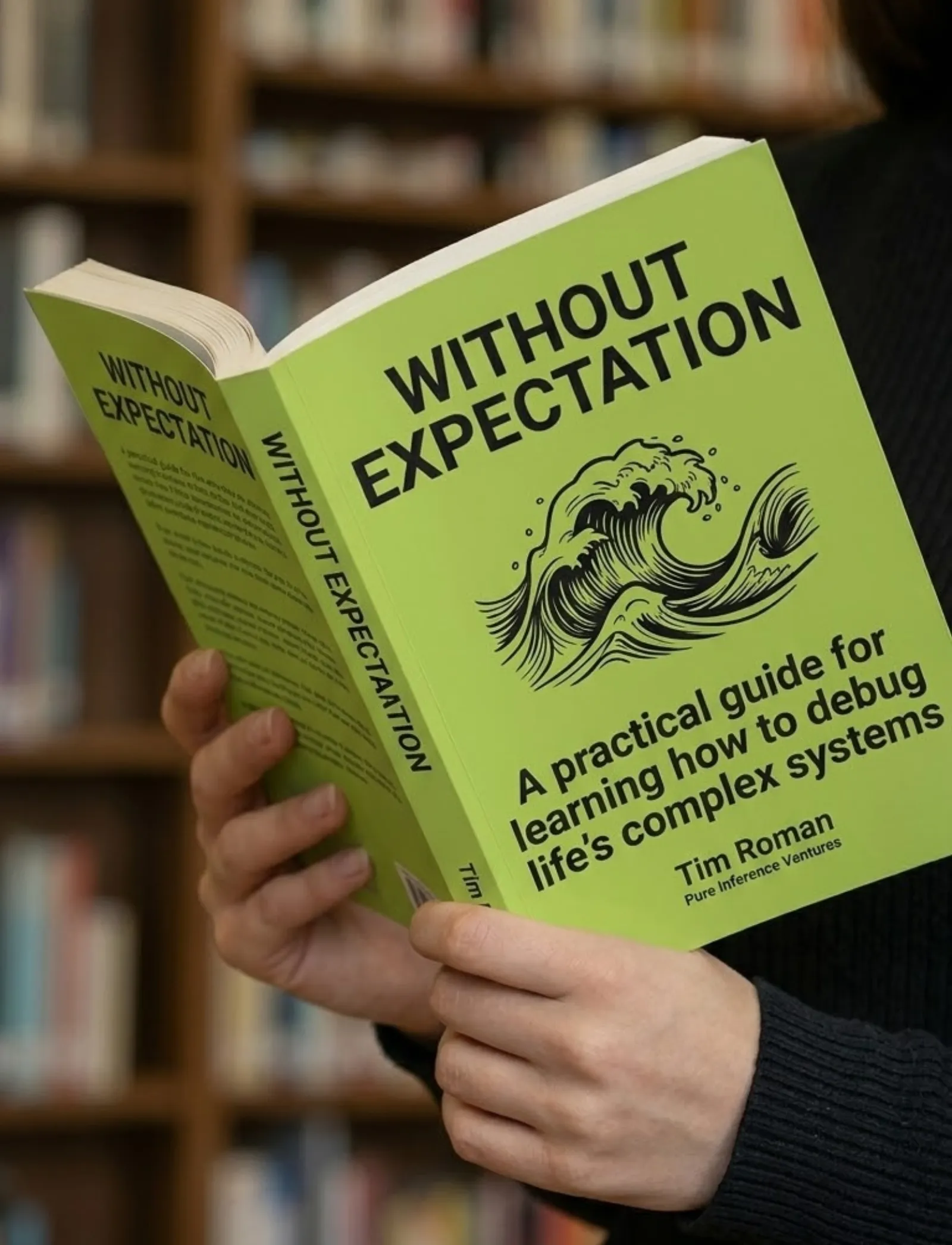
Book & App — Launching September 2026
Without Expectation
Debugging Life's Complex Systems
The same systematic approach engineers use to debug complex systems — applied to the complex system of your life. Learn to observe without judgment, distinguish symptoms from root causes, and run small experiments that compound into massive change.
- 23 chapters
- AI prompt templates
- iOS companion app
- Print, digital & audio
If you liked this, you might also like...
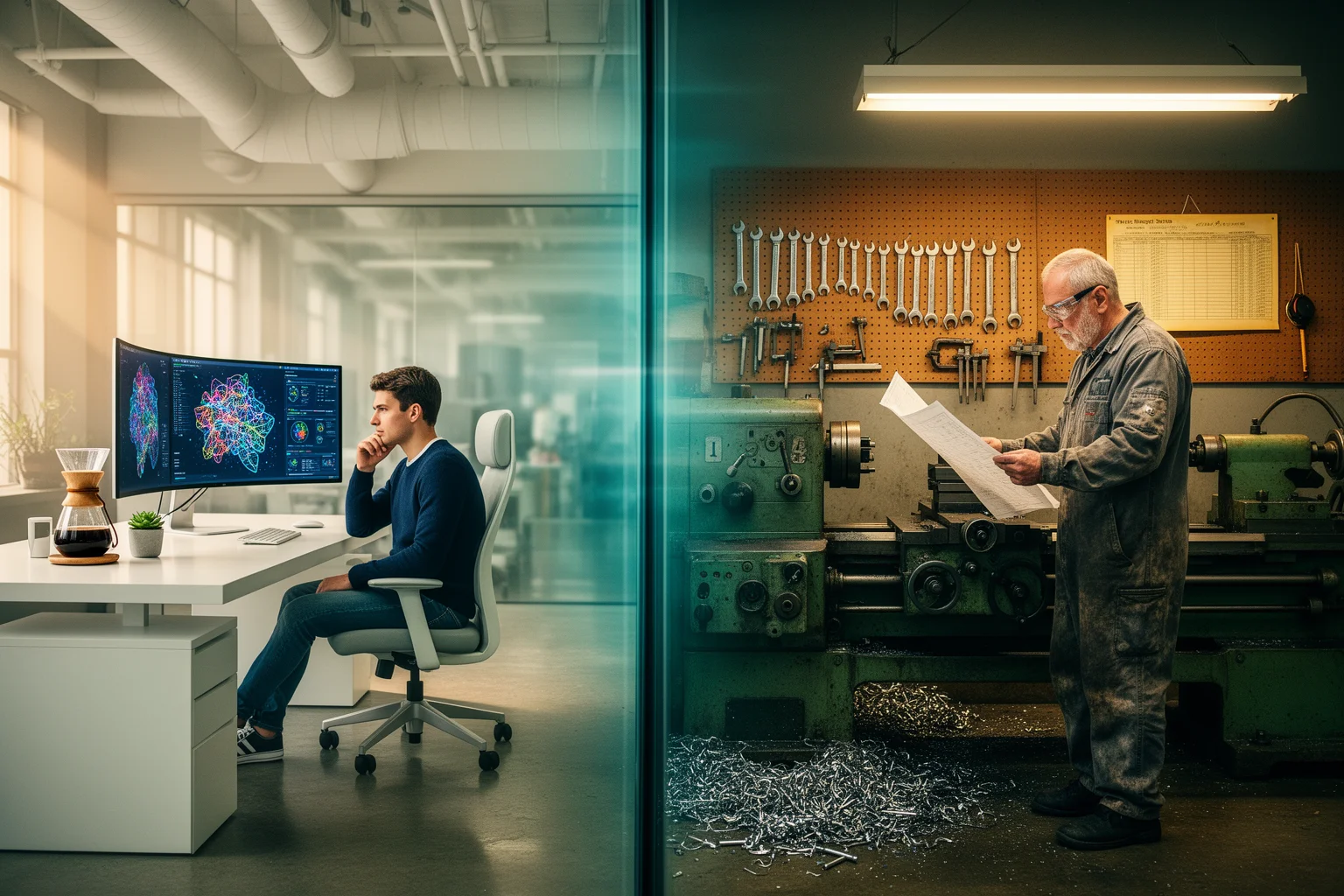
Diffusion Is the Strategy
The most exciting opportunity in AI isn't building better models. It's bringing existing capabilities to industries that haven't adopted them yet.

Bespoke Software
Mass-market software is off-the-rack — designed for millions, perfect for nobody. For the first time, individuals can commission software that fits exactly how they think and work.