

Friday, January 23, 2026
Your Attention Is the Product
Build your own algorithm or feed someone else's.
The most viral content on social media isn't an accident.
TikTok's algorithm is optimized to be engaging — not useful, not educational, not good for you. Engaging. Every scroll, every pause, every replay trains a model designed to capture your attention and sell it to advertisers.
You are not the customer. You are the product.
This has been true for a decade. What's changed is that you can now opt out.
The Attention Economy's Dirty Secret
Every free platform runs the same playbook: capture attention, monetize attention. The algorithm learns what keeps you scrolling — outrage, controversy, fear, envy — and serves you more of it.
The provider's goals are not your goals. They want engagement. You want progress. These objectives are often directly opposed.
Google's new "Personal Intelligence" is the same pattern dressed up as personalization. Yes, it learns about you. But it learns about you to serve you content that keeps you in the ecosystem. The optimization function isn't "help you achieve your goals." It's "keep you using Google products."
The Personalization Trap
There are two ways to personalize software: implicit and explicit.
Implicit personalization watches your behavior and infers what you want. It's the model behind every attention-harvesting platform. You never tell TikTok what you want — it figures you out by tracking what makes you pause, what makes you scroll, what makes you come back. The platform controls the optimization function.
Explicit personalization is you telling the system what you want. No inference. No surveillance. You write down your preferences, your constraints, your goals — and the system follows your instructions.
The difference isn't technical. It's political. Implicit personalization serves whoever controls the algorithm. Explicit personalization serves whoever writes the instructions.
This is why configuration files like CLAUDE.md matter. When you write explicit instructions for your AI tools, you're not just saving time on context-setting. You're taking control of the optimization function. The AI works for your stated goals, not for inferred engagement patterns.
Google will never let you write a config file that says "don't show me anything designed to waste my time." That would break the business model.
The Custom Software Moment
Here's what's changed: building your own tools is now accessible.
A year ago, creating custom software required either deep technical skills or significant capital. Now, anyone who can describe what they want can build it. AI has collapsed the barrier between "I wish this existed" and "I built this."
This isn't about avoiding subscription fees. It's about controlling the optimization function.
When you build your own:
- Reading app, it optimizes for your learning goals, not engagement metrics
- Task manager, it optimizes for your productivity, not feature upsells
- Content feed, it optimizes for your definition of value, not advertiser revenue
You become the customer again instead of the product.
Your Data, Your Models
The next frontier is on-device intelligence. Models that run locally, trained on your data, optimizing for your goals — with no company in the middle extracting value from your attention.
Apple is moving this direction with on-device ML. Open source models are becoming capable enough to run on consumer hardware. The technical barriers are falling.
The question is whether you'll use these capabilities to build tools that serve you, or keep outsourcing your attention to platforms that monetize it.
Every app on your phone with an algorithmic feed is making decisions about what you see. Those decisions are optimized for the app's goals, not yours. Local-first software flips that equation.
The Sovereignty Argument
Data sovereignty isn't just about privacy. It's about who controls the algorithms that shape your attention.
Every hour you spend in someone else's optimized environment is an hour your attention is being directed toward their goals. The compound effect over years is profound — and invisible. The apps you use are quietly steering what you think about, what you believe, what you want.
Custom software is how you take that back.
The Choice
We can all build now. Not just developers — anyone willing to describe what they want and iterate on it.
The platforms want you to believe that personalization requires surveillance, that "free" is a fair trade for your attention, that the algorithm knows what's best for you.
It doesn't. It knows what's best for them.
The question isn't whether custom software is possible. It's whether you'll keep letting platforms optimize your attention for their benefit, or start building tools that optimize for yours.
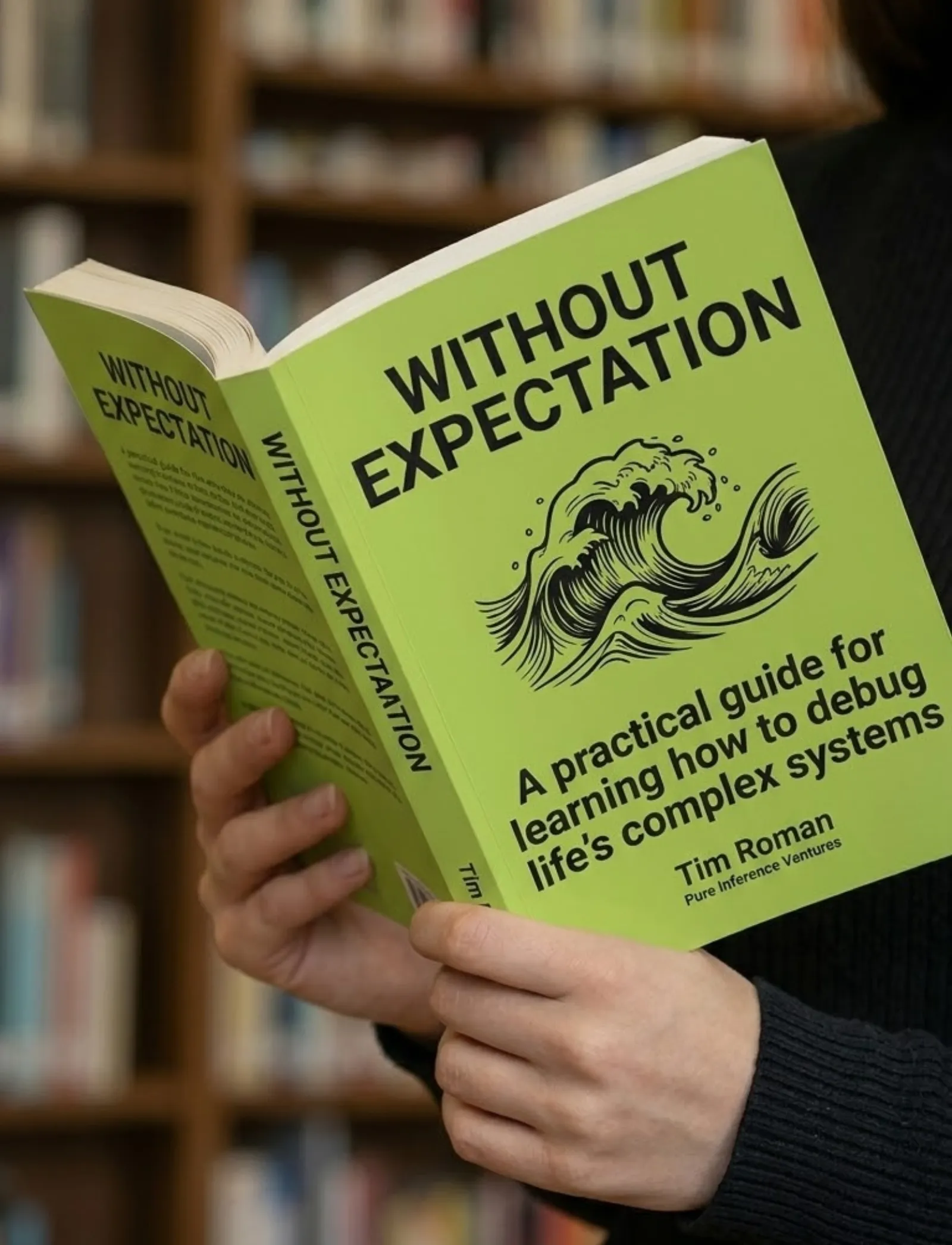
Book & App — Launching September 2026
Without Expectation
Debugging Life's Complex Systems
The same systematic approach engineers use to debug complex systems — applied to the complex system of your life. Learn to observe without judgment, distinguish symptoms from root causes, and run small experiments that compound into massive change.
- 23 chapters
- AI prompt templates
- iOS companion app
- Print, digital & audio
If you liked this, you might also like...

From SendGrid to Sovereignty
When they won't let you in, build your own door

Why I Built My Own Accounting Software
QuickBooks is designed for millions of businesses. Mine has one user, one company, and an AI operator who reads every transaction. That changes everything about how accounting software should work.