

Sunday, February 8, 2026
The Compounding Loop for Content
Raw ideas in, published work out. Faster every cycle.
I've always had more ideas than published work. Shower thoughts that never made it to paper. Half-finished drafts in a folder I stopped opening. Insights from conversations that faded before I could write them down.
The bottleneck was never having something to say. It was the friction between thinking and publishing.
In The Compounding Loop, I described a four-phase pattern for AI-assisted development. But the pattern isn't limited to code — it works for any creative output.
Here's what it looks like applied to content, and how it's changed what I'm able to produce.
The Bottleneck Was Never Writing
For years, content creation felt like squeezing water from a rock. You stare at a blank page. You try to remember that insight you had in the shower. You write a paragraph, delete it, write another. Two hours later you have 400 words and a headache.
The problem isn't that you can't write. It's that you're trying to do four things at once: have ideas, structure them, write them, and edit them. Each step requires a different mode of thinking. Switching between them constantly is exhausting.
The solution is obvious once you see it: stop trying to do it all at once. Build a pipeline where each phase feeds the next, and AI handles the translation between them.
The Four Phases
Here's what actually works:
Phase 1: Raw capture. Talk through ideas when you have them. Voice memos in the car. Half-finished notes. Rambling observations. Don't worry about structure — just get the thought out of your head before it disappears. This is where most content dies: people have the idea but never capture it.
Phase 2: Structured expansion. Take that raw material and have AI expand it. "Here's a rough idea I had — what are the key points? What's the structure? What examples would strengthen this?" AI doesn't replace your thinking; it reflects it back to you in organized form. You're still the source. AI is the mirror.
Phase 3: Draft generation. With structure in hand, generate the actual piece. This is where the compounding loop kicks in: run multiple versions, pick the best, iterate fast. The spec constrains the output. The output matches the intent.
Phase 4: Your voice as the filter. Read through, cut what doesn't sound like you, sharpen what does. This is the only phase that requires extended focused attention. Everything else can happen in fragments throughout the day.
Why This Compounds
The pipeline doesn't just produce content faster. It produces more content from the same amount of thinking.
One shower insight used to become one blog post — maybe. Now it becomes an insight post, a Twitter thread, a newsletter section, and fodder for three future pieces. The idea gets fully extracted instead of partially captured.
And because capture is separate from writing, you capture more. That half-thought you'd normally dismiss? Record it. Let the pipeline figure out if it's useful. Most won't be. Some will turn into your best work.
Volume creates selection pressure. When you generate more, you can afford to publish only what's actually good. The paradox: producing more content raises quality, because you're choosing from a larger pool.
The Mindset Shift
People resist this because it feels like cheating. "If AI helped, is it really mine?"
Here's how I think about it: AI didn't have the insight. AI didn't live the experience that created the insight. AI didn't decide what was worth saying. You did all of that. AI just handled the manual labor of turning thought into text.
That's not cheating. That's art. Good artists steal. There's nothing new under the sun. Everything is a remix.
Every human innovation is built on what came before — language, math, music theory, literary tropes. The only difference now is the iteration speed went from generations to seconds.
The pearl-clutching about AI and creativity is a lag indicator. They said the same things about sampling. About collage. About photography itself. The tools change; the hand-wringing stays constant. Meanwhile, the people actually making things move on and use what works.
That's what the 100x solo operator does. Outsource the commodity work. Keep the judgment.
The goal isn't AI-generated content. It's your content, generated faster. The cost per outcome drops not because the outcome changes, but because the process becomes frictionless.
Building Your Pipeline
Start simple:
-
Capture tool. Whatever lets you record thoughts with zero friction. Voice memos work. So does a notes app you actually use. The tool matters less than the habit.
-
Expansion prompt. Something like: "Here's a rough idea. Identify the core insight, suggest a structure, and list examples that would strengthen it." Save this; you'll use it constantly.
-
Draft workflow. Feed the structure into whatever writing environment you prefer. Generate multiple versions. Pick the best bones and revise.
-
Publishing rhythm. Commit to a frequency and stick to it. Weekly is enough to compound. Daily is better if you can sustain it. The rhythm creates accountability; the pipeline makes it achievable.
The hardest part is the first week. After that, you'll have a backlog of captured ideas waiting to be processed. The constraint flips from "I don't have anything to say" to "which of these do I want to say first?"
What This Enables
Consistent publishing does something that sporadic publishing can't: it creates a body of work that references itself. Each piece can build on previous ones. Readers see the bigger picture forming. Your thinking becomes a system, not a collection of one-offs.
That's the compounding loop applied to ideas. Each piece you publish is intellectual infrastructure. Future pieces can stand on it. The more you've written, the easier it becomes to write more — because you have more to reference, more to build on, more foundation beneath you.
The Pattern Is Universal
Content is one application. But every input stream can feed a compounding loop:
- Customer feedback → product specs → feature development → better products
- Support cases → documentation → self-service content → fewer support cases
- Sales calls → objection patterns → training materials → better sales calls
- Employee meetings → process improvements → operational playbooks → smoother operations
- Market research → positioning → marketing content → customer acquisition
The four phases stay the same. Raw capture. Structured expansion. Draft generation. Human judgment as the filter. What changes is the input and the output.
The question isn't whether you have something worth systematizing. You do. The question is whether you'll build the loop that turns your inputs into compounding outputs.
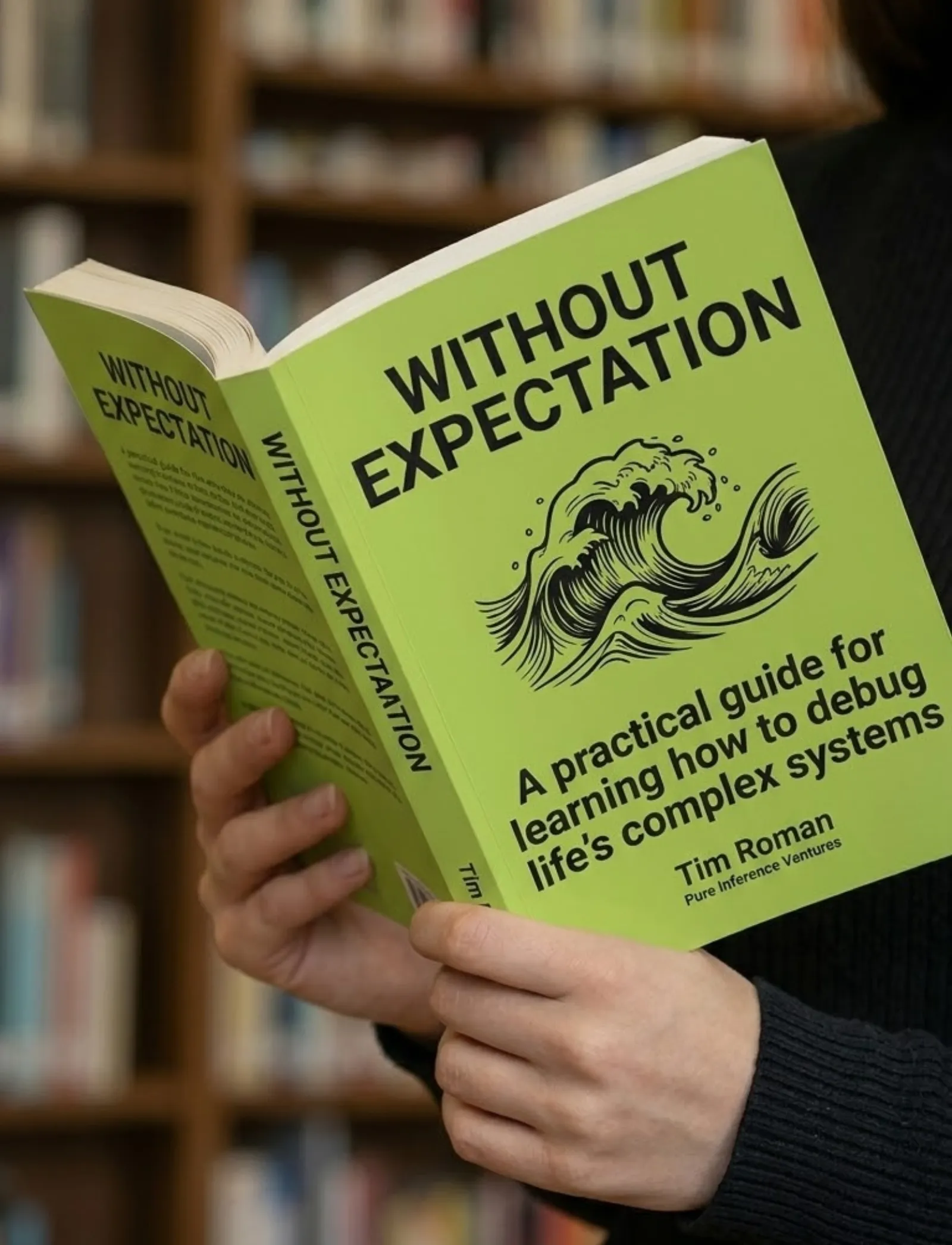
Book & App — Launching September 2026
Without Expectation
Debugging Life's Complex Systems
The same systematic approach engineers use to debug complex systems — applied to the complex system of your life. Learn to observe without judgment, distinguish symptoms from root causes, and run small experiments that compound into massive change.
- 23 chapters
- AI prompt templates
- iOS companion app
- Print, digital & audio
If you liked this, you might also like...

The Compounding Loop
We're optimizing our workflows while AI optimizes its own. The gains compound faster than anyone expected. Here's how I'm actually using this — and why the same pattern works beyond software.

Stop Re-Explaining Yourself to AI
Every session starts fresh. Same context-setting. Same preferences. Same constraints. There's a better way — and it takes one file to fix.